


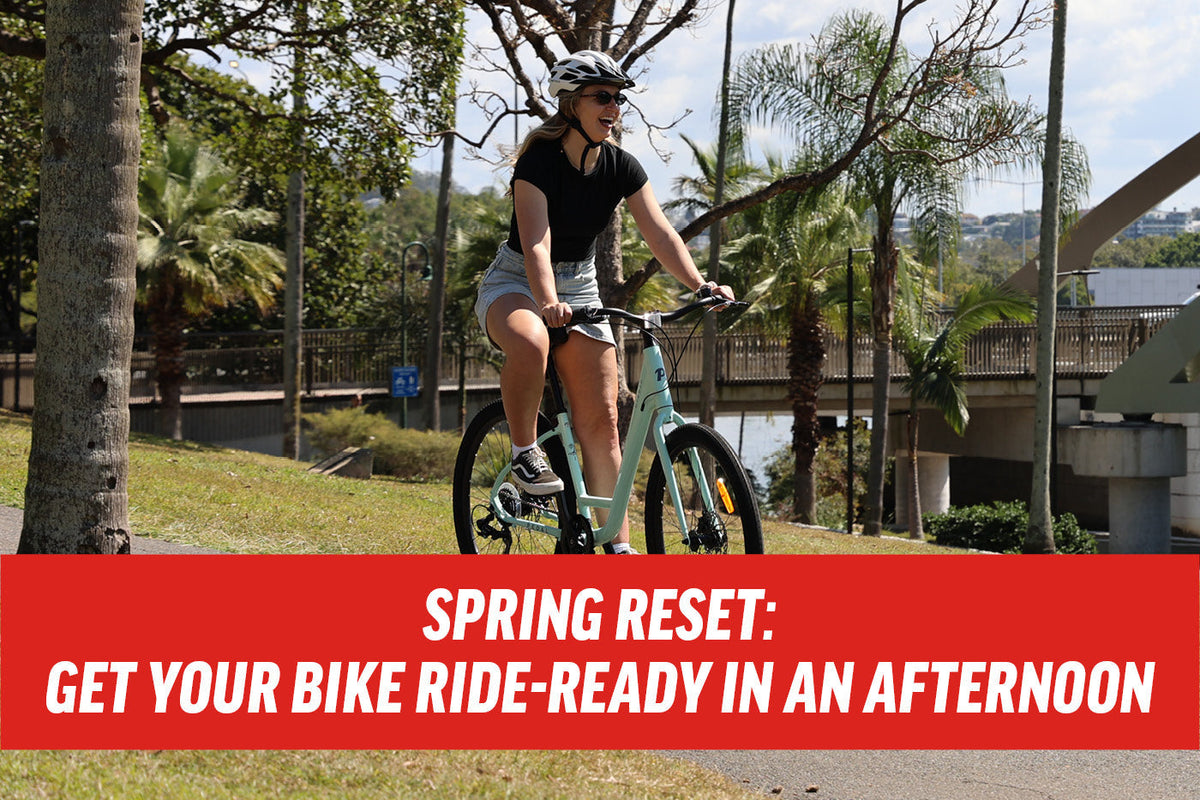
Winter's done, your bike's been hanging in the garage for months, and the first warm weekend is coming. A bike that's been sitting still for months isn't broken but a few things drift while it's parked.
Good news is getting it back to feeling new doesn't take a full service (although we'd highly recommend a workshop visit if it's been over a year).
Four things worth sorting before your first ride back.
1. Tyres
- Tyres will lose air just sitting there often 5–10 psi a week. Pump them back to pressure before you ride (more on the right number below).
- Look at the sidewalls. Cracks or a dry, perished look mean the rubber's aged in storage and is definitely worth replacing.
2. Brakes
- Squeeze both levers. They should feel firm and stop well short of the bar. Spongy or pulling to the grip needs attention.
- Glance at the pads. If they're near the wear line, book them in before your first big ride.
3. Chain
- If it looks dry, rusty or orange, don't ride it like that. A neglected chain is loud, slow and damages your drivetrain. Wipe it down and re-lube.
4. The once-over
- Check the wheels are done up tight (quick-releases closed, thru-axles snug). Try to twist the bars against the front wheel and check there's no movement.
- Quick squeeze of the stem, seatpost and any bag racks or bottle cages to make sure nothing's worked loose.
Spring is our busiest workshop stretch, so if something feels off, book a service early rather than waiting. Your local 99 Bikes store can get you sorted.

Myth # 1: Pump your tyres to the big number printed on the sidewall and you'll roll faster.
The number on your sidewall is a ceiling, not a target. Run tyres too hard and they skip across bumps instead of gripping them. You lose traction, comfort and, on real roads, often speed too.
What actually decides your number
- Your weight: a heavier rider needs more pressure than a lighter one on the same tyre.
- Tyre width: wider tyres run lower. A 25mm road tyre and a 2.4" mountain bike tyre live in completely different worlds.
- Where you ride: smooth road wants more; gravel, dirt and wet want less for grip.
- Tubes vs tubeless: tubeless lets you safely run lower without pinch flats.
A rough starting point
- Road (700x25–28): many riders land somewhere in the 70–95 psi range.
- Gravel: roughly 30–45 psi.
- Mountain bike: often 20–30 psi.
These are starting points, not exact. Find your own: start mid-range, then drop about 5 psi at a time until the ride feels grippy and comfortable without the rim ever bottoming out on bumps. That sweet spot is yours.

Myth # 2: A well-oiled chain is a happy chain, so keep the lube coming.
Too much lube (and lube on a dirty chain) is worse than too little. Excess oil on the outside grabs dust and grit and turns it into a grinding paste that wears out your chain, cassette and chainrings faster. The lube belongs inside the rollers, not slathered over the top.
The right way, in four steps
- Clean first. Wipe the chain down with a rag, or use a degreaser if it's properly gunky. Never lube over grime.
- One drop per roller. Run the pedals backwards and drip a single drop onto each link as it goes by.
- Work it in. Backpedal a few turns so the lube gets inside where it matters.
- Wipe off the excess. Hold the rag lightly on the chain and backpedal again. The outside should feel dry to the touch.
Wet or dry lube? Use wet lube for wet, muddy, winter riding and dry lube for dry, dusty conditions.
You should lube your chain when it looks dry or starts squeaking, and after any wet or particularly long ride. If you're not sure, your chain will almost certainly tell you.

Myth # 3: A filthy bike just needs a good blast with the hose, same as the car!
High-pressure water is how bearings die young. Blast a hose or pressure washer straight at your hubs, bottom bracket or headset and you force water past the seals into the bearings, where it sits and rusts. Those are the exact spots to keep the jet away from.

Here's the safe way:
- Bucket of warm, soapy water and a soft brush or sponge. Wash the frame and wheels top to bottom.
- Rinse gently with a light hose, watering can or a spray bottle. Low pressure, never aimed at the bearings.
- Do the drivetrain last. A dedicated degreaser and a stiff brush on the chain, cassette and derailleurs, then rinse lightly.
- Dry it off, then re-lube the chain. Washing strips the old lube so a fresh application is the final step every time.
That's your bike sorted for spring! Got questions? Chat to our friendly in-store team members. Find your local store here.


